
ATMOSFAR Scrap Guide: Wrecks, Debris Fields and Salvage
Where ATMOSFAR scrap comes from, how extractor and material processor differ, which wrecks need a Hauler, and how to salvage PACE sites safely.
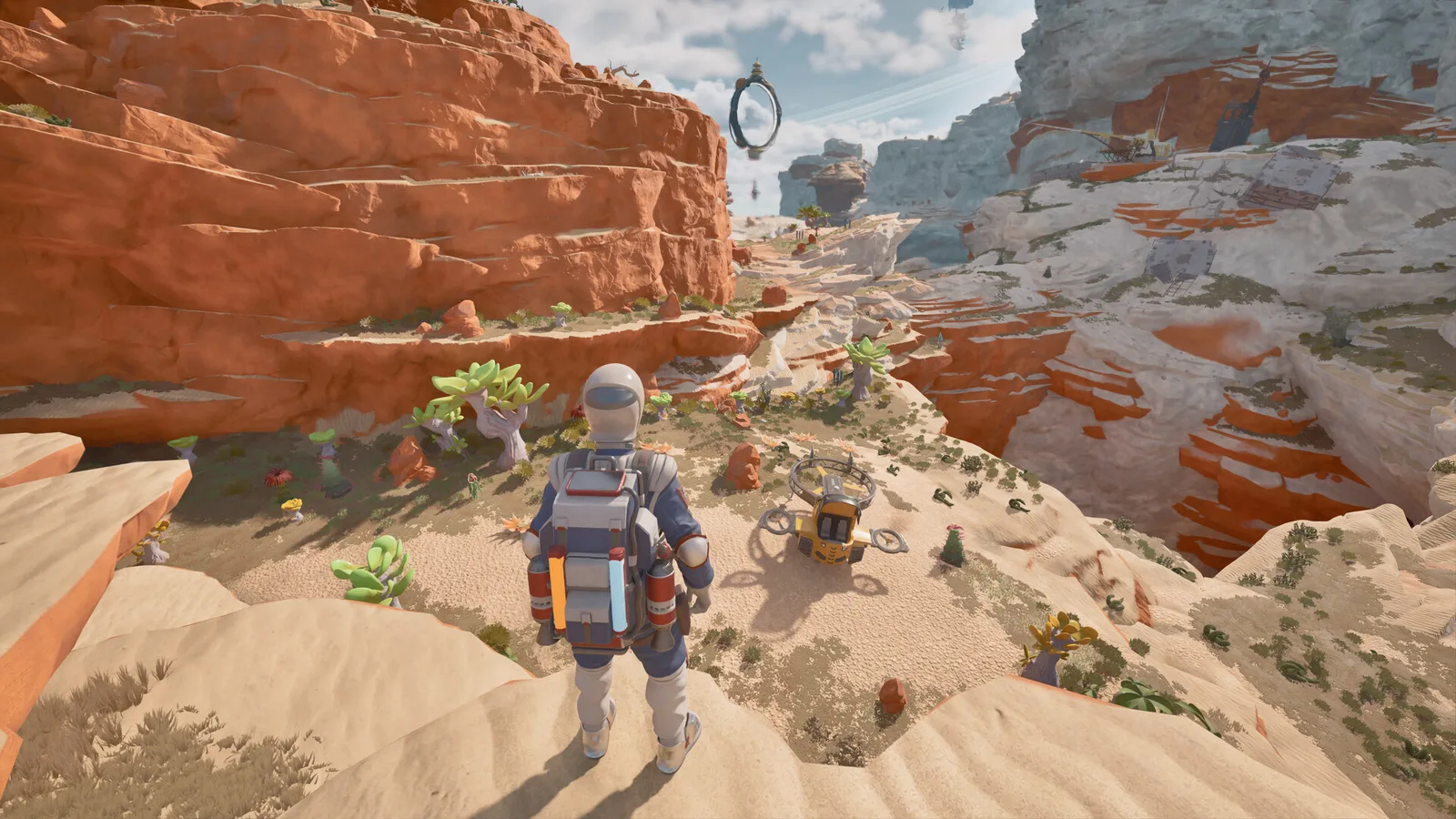
Scrap is ATMOSFAR's universal building material. Small pieces go in the backpack, large pieces need the material processor, and the biggest wrecks need the Hauler's crane. PACE sites have the richest salvage and the most dangerous guards.
ATMOSFAR's world is a graveyard of a civilisation that left in a hurry. PACE facilities, crashed craft, abandoned camps and floating debris fields are all full of material, and almost everything you build starts as something you tore apart.
The three grades of salvage
| Grade | Examples | Tool | Transport |
|---|---|---|---|
| Loose scrap | Panels, pipes, small machine parts | Handheld extractor | Backpack |
| Structural scrap | Hull sections, industrial tanks, machinery | Material processor | Hauler crane / cargo |
| PACE artefacts | Circuit boards, research drives, cores | Extractor / research desk | Backpack, carefully |
The handheld extractor breaks scrap into material chunks small enough to carry. It has a size limit. Anything larger has to be fed to the material processor, which is built on the Cloud Cruiser and accessed from an exterior escalator so a Hauler can deliver directly.
Where scrap comes from
PACE facilities
PACE was the research and colonisation authority, and its facilities are the densest salvage sites. Expect:
- structural scrap in walls and roofs,
- circuit boards and electronics,
- research artefacts,
- guard drones and AA turrets that are still doing their job.
Approach on foot, stun the drones, and extract them before they reboot. Do not fly a Utility or Striker straight at an active AA turret; the turret's ammunition is effectively unlimited and one burst can end the trip.
Abandoned camps
Smaller, safer and less rewarding. Tents, crates, tools and the occasional circuit board. Good early-game scrap when your extractor is basic and your combat options are thin.
Debris fields
Floating clusters of industrial tanks and wreckage, held up by buoyancy balloons. These are the Hauler's natural habitat: the pieces are too big to carry and often too big for the handheld extractor. Fly close, hook the load, and bring it to the ship's processor.
Crashed Wasps and ships
Wrecks of smaller craft are scattered around the islands. They yield hull material, engine parts and sometimes a usable component. Treat them as a parts bin, not a jackpot.
The salvage loop, step by step
- Spot the site from altitude. Use the spotting scope to mark structures and read island data.
- Land short and walk in. Keep the Wasp out of turret range.
- Clear threats. Stun drones; avoid AA arcs; watch for Screechers overhead.
- Strip the small stuff first. Circuit boards and artefacts weigh little and are worth the most.
- Tag the big pieces. A waypoint on a hull section saves a second search.
- Bring the Hauler. Lift the structural scrap to the ship's processor.
- Process and sort. Feed large pieces through the material processor; check the output for blueprints and remains.
What large scrap hides
The material processor is not just a crusher. Large pieces can contain:
- blueprints for craftables,
- clues about PACE and the fall of the colony,
- historical remains that feed the story.
That makes a big, awkward hull section worth more than its metal. If a piece is too heavy to move, mark it and come back with the right craft rather than hacking it apart with the extractor.
Managing weight and trips
Scrap is heavy, and weight is the enemy of every aircraft in ATMOSFAR.
- Do not fill the Hauler to the ceiling. Leave lift margin for the climb out.
- Process before you travel. Raw structural scrap is bulkier than the materials it yields.
- Drop the low-value fraction. If the hold is full and you find circuit boards, dump the pipes.
- Refuel before loading. A heavy ship burns more on the way home.
A good rule: one trip should end with the ship's tanks above a quarter and the hold below its limit. If either is borderline, you are one storm away from a recovery mission.
Salvage safety
- AA turrets are the biggest killer of small craft. Learn their silhouette and give them a wide berth.
- PACE drones reboot after a stun. Extract them fast or disable the spawner.
- Screechers attack from the air and are aggressive. Travel in a Striker or fly high.
- Unstable reactors — if you find a core, do not drop it. Hauler crane, slow flight, gentle landing.
- Weather — a loaded Hauler in a thunderstorm is a bad combination. Wait it out on the ground.
Early-game scrap priorities
Build in this order and your scrap goes furthest:
- Crafting table and camp basics — without them you cannot process anything.
- Hydrogen refinery and tank — fuel independence unlocks distance.
- Wasp repairs and hovers — a damaged Wasp eats fuel.
- Material processor — turns big wrecks into a resource stream.
- Ship lift and reactor headroom — the gate to everything heavier.
Resist the urge to build a beautiful hull before the industrial spine exists. The hull will still be there when the refinery works.
Early Access footage from Tycos. Screenshots: Apog Labs / SHUEISHA GAMES.
FAQ
Does scrap respawn? Not documented for Early Access. PACE sites are hand-placed; islets are procedurally generated. Plan routes rather than farming one spot.
Can I process scrap at a field camp? The material processor is a ship module. Field camps can craft and refine, but large-piece processing happens on the Cloud Cruiser.
What is the most valuable scrap? Circuit boards and research artefacts by weight; reactor cores by rarity. Structural scrap is the bulk material that keeps construction moving.
Can the extractor break anything? No. It has a size limit. Large pieces need the processor.
Is salvaging PACE sites worth the risk? Yes, once you can handle drones and turrets. The electronics and artefacts are the fastest route to research progress.
Sources
- ATMOSFAR on Steam — store description, system requirements and Early Access notes.
- ATMOSFAR Steam news hub — patch notes and developer posts.
- ATMOSFAR official site — Apog Labs announcements and media.
Related reading: ATMOSFAR Resources Guide: Every Material and Source and ATMOSFAR Crafting Guide: Tables, Research and Recipes.
Source note: mechanics and figures in this guide follow the Early Access build available on 30 October 2026, cross-checked against the ATMOSFAR Steam page and Apog Labs developer posts.
More ATMOSFAR Guides
How crafting works in ATMOSFAR: crafting table, research desk unlocks, blueprint sources, material processing and the order to build tools and ship parts.
The animals, plantimals and machines that end ATMOSFAR runs: Screechers, Blisterbacks, Traproots, PACE drones and AA turrets, with counters for each.
The ATMOSFAR Early Access roadmap: Vagabond, Rime, Blue Side and Singularity updates, the Scout Wasp, the third region, 1.0 timing and launch content.
Find ATMOSFAR hydrogen crystals near geysers, harvest them safely, haul them with the Hauler and turn them into liquid hydrogen before your Wasp runs dry.
Run an ATMOSFAR hydrogen refinery without draining your camp: power draw, cold storage at -253°C, field vs ship refining, siphon top-ups and common failures.
How the ATMOSFAR map works: the floating layers of Tycos, where Caligo Cays sits, what Early Access includes and how to navigate without a full map.
ATMOSFAR released on 29 October 2026 in Steam Early Access at $24.99, with a 10% launch discount to $22.49. Platforms, editions and what comes next.
A practical map of ATMOSFAR resources: scrap, circuit boards, hydrogen crystals, wood, food, water, artefacts and cores, with where to look for each.